
Cell Based Assays




Enzo Life Sciences Caspase-Cell Lysis Buffer (30ml)
Formulation: Liquid. In 50 mM HEPES, pH 7.4, containing 0.1% CHAPS, 5 mM DTT, 0.1 mM EDTA. Long Term Storage: -20°C.

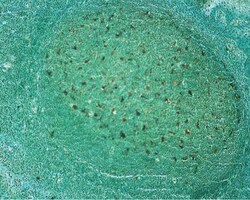
Abcam TUNEL Assay Kit HRP DAB
TUNEL Assay Kit HRP DAB
The product is subject to the following: Abcam Restricted Use Statement
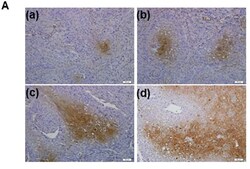
Abcam 8-Hydro x y-2'-deo x yguanosine, O x idative stress biomarker, 1MG
MW 283.24 Da, Purity >98%. Oxidative stress biomarker. A predominant form of free radical-induced oxidative lesions in nuclear and mitochondrial DNA. Oxidized deoxyguanosine derivative. Biomarker for oxidative stress and carcinogenesis.
The product is subject to the following: Abcam Restricted Use Statement
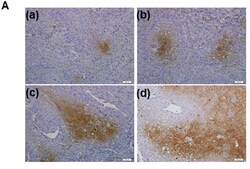
Abcam 8-Hydro x y-2'-deo x yguanosine, O x idative stress biomarker, 5MG
MW 283.24 Da, Purity >98%. Oxidative stress biomarker. A predominant form of free radical-induced oxidative lesions in nuclear and mitochondrial DNA. Oxidized deoxyguanosine derivative. Biomarker for oxidative stress and carcinogenesis.
The product is subject to the following: Abcam Restricted Use Statement
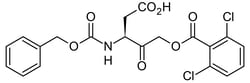
Abcam Z-Asp-CH2-DCB, caspase inhibitor, 10MG
MW 454.3 Da, Purity >98%. Irreversible, cell permeable broad-spectrum caspase inhibitor (IC₅₀ values are 1.1 and 4.1 μM for caspase-3 and caspase-6 respectively). Inhibits hypoxia-induced apoptosis. Shows anti-ischemic effects in vivo. .
The product is subject to the following: Abcam Restricted Use Statement
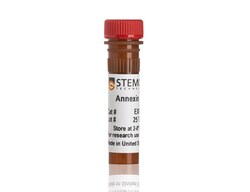
STEMCELL Technologies Annexin V, PE, Size: 25 Tests
Annexin V is a member of the annexin family of proteins that bind to membrane phospholipids in the presence of calcium. This dye has high affinity for phosphatidylserine (PS) that is present in the inner leaflet of the plasma membrane. Verified for use with flow cytometry assays use this antibody to detect the translocation of PS to the external environment. Annexin V is used along with viability dyes such as 7-AAD (Catalog 75001) or Propidium Iodide (Catalog 75002). The process of PS translocation occurs prior to the loss of membrane integrity. Therefore as cells progress through apoptosis and towards necrosis the cell membrane is compromised and consequently viability dyes pass into the cell. Thus cells undergoing early apoptosis stain positive for Annexin V and negative for viability dyes while apoptotic death or necrosis is characterized by positive staining for both Annexin V and the viability d

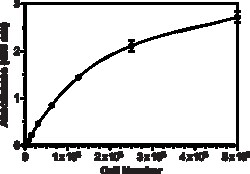
Cayman Chemical WST-8 Cell Proliferation Assay Kit, 96 Well
Cayman's WST-8 Cell Proliferation Assay provides a tool for studying induction and inhibition of cell proliferation in any in vitro model. The assay is based on the extracellular reduction of WST-8 by NADH produced in the mitochondria resulting in a water-soluble formazan which dissolves directly into the culture medium. Cayman's WST-8 assay is preferred when higher cell densities are expected, as up to 5 x 10⁶ cells/ml can be successfully quantified.

Eagle Biosciences Inc Colorimetric Assay for Nitric Oxide Synthase
Colorimetric Nitric Oxide Assay Kit